Restaurant Operations
Restaurant Waitlist vs. Reservations: What's the Difference?
Compare restaurant waitlists and reservations, learn when to use each, and discover how SeatPing helps manage walk-ins, bookings, and table seating.
SeatPing Team

Restaurant Waitlist vs. Reservations: What's the Difference?
Managing guest arrivals can be challenging for restaurants. Some customers walk in hoping for an available table, while others prefer to book ahead. Without a clear system, handling both can lead to crowded entrances, scheduling conflicts, and frustrated guests.
Restaurant waitlists and reservation systems both help organize seating, but they serve different purposes.
In this guide, we'll explain their differences, when to use each, and how restaurants can manage both with SeatPing.
What Is a Restaurant Waitlist?
A restaurant waitlist organizes guests who are waiting for an available table. Traditionally, restaurants use paper sign-in sheets or ask guests to wait near the entrance until their names are called.
With a digital restaurant waitlist, guests can join a virtual queue from their phones while staff manage waiting parties through a centralized dashboard.
Here's how it works:
Join the waitlist. Guests enter their name, party size, and contact details.
Wait comfortably. Guests can wait away from the entrance while staff monitor table availability.
Receive updates. Guests receive notifications through configured messaging channels.
Get seated. Staff coordinate seating as tables become available.
For a step-by-step setup guide, read QR Code Waitlist for Restaurants: How It Works & How to Set It Up.
What Is a Restaurant Reservation System?
A restaurant reservation system allows guests to book a table for a specific date and time before arriving.
Unlike waitlists, reservations help restaurants plan future seating availability and anticipate customer demand.
A typical reservation process involves:
Select a date and time. Guests choose their preferred dining schedule.
Enter booking details. They provide their name, party size, and contact information.
Confirm availability. The system checks whether the restaurant can accommodate the booking.
Receive confirmation. Guests receive their reservation details.
Arrive and get seated. Staff coordinate seating around scheduled arrivals.
Reservations are particularly useful for restaurants with limited seating, longer dining durations, or customers who prefer planning ahead.
However, restaurants must also account for cancellations, late arrivals, and no-shows.
Restaurant Waitlist vs. Reservations: Key Differences
The main difference is when guests request a table and how availability is managed.
Feature | Restaurant Waitlist | Restaurant Reservations |
|---|---|---|
Primary Purpose | Manage waiting guests | Schedule future visits |
Guest Arrival | Usually walk-in | Planned in advance |
Table Availability | As tables become available | Checked before booking |
Guest Flexibility | Spontaneous visits | Planned visits |
Main Challenge | Uncertain wait times | Cancellations and no-shows |
Best Suited For | Walk-in-heavy restaurants | Booking-focused restaurants |
Neither approach is automatically better. The right choice depends on your restaurant's guest traffic, seating capacity, and operating model.
When Should Restaurants Use a Waitlist?
A restaurant waitlist is often the better choice when customer arrivals are unpredictable.
Frequent Walk-In Customers
Cafés, casual restaurants, and other walk-in-heavy establishments can use waitlists to organize arriving guests without requiring advance bookings.
Limited Waiting Space
Virtual waitlists allow guests to wait away from crowded entrances while staying informed about their queue status.
Unpredictable Table Turnover
Dining durations vary between customers. A waitlist gives staff flexibility to seat guests as appropriate tables become available.
Faster Guest Check-Ins
With QR code check-ins, guests can enter their information directly from their phones, reducing repetitive work at the host stand.
A waitlist works best when restaurants need flexibility to manage arrivals based on current table availability.
When Should Restaurants Accept Reservations?
Reservations are typically more suitable when customers plan visits in advance or when restaurants need greater control over scheduled arrivals.
Customers Prefer Planning Ahead
Guests celebrating birthdays, anniversaries, or special occasions may prefer securing a booking before visiting.
Better Visibility Into Demand
Reservations help restaurants anticipate guest volume, prepare staffing, and organize table availability for upcoming service periods.
Limited Seating Capacity
Smaller restaurants and fine dining establishments can use advance bookings to allocate tables more deliberately.
Predictable Dining Periods
Scheduled reservations help distribute expected arrivals across available time slots, making guest flow easier to anticipate.
Reservations work best when restaurants and guests benefit from planning seating availability in advance.
Can Restaurants Use Both Waitlists and Reservations?
Yes. Restaurants that welcome both walk-in customers and advance bookings can benefit from using both systems together.
For example, a restaurant might accept dinner reservations while maintaining a digital waitlist for customers arriving without bookings.
The challenge is coordinating table availability between these two groups.
Seating too many walk-in guests could interfere with upcoming reservations, while reserving every table could unnecessarily limit walk-in availability.
A combined system helps staff:
Monitor waiting guests and upcoming reservations.
Check table availability before seating parties.
Coordinate seating without overcommitting tables.
Communicate updates to waiting customers.
Managing walk-ins and advance bookings together requires clear seating coordination, especially during peak hours. For practical strategies, explore How to Manage a Restaurant Waitlist During Busy Hours.
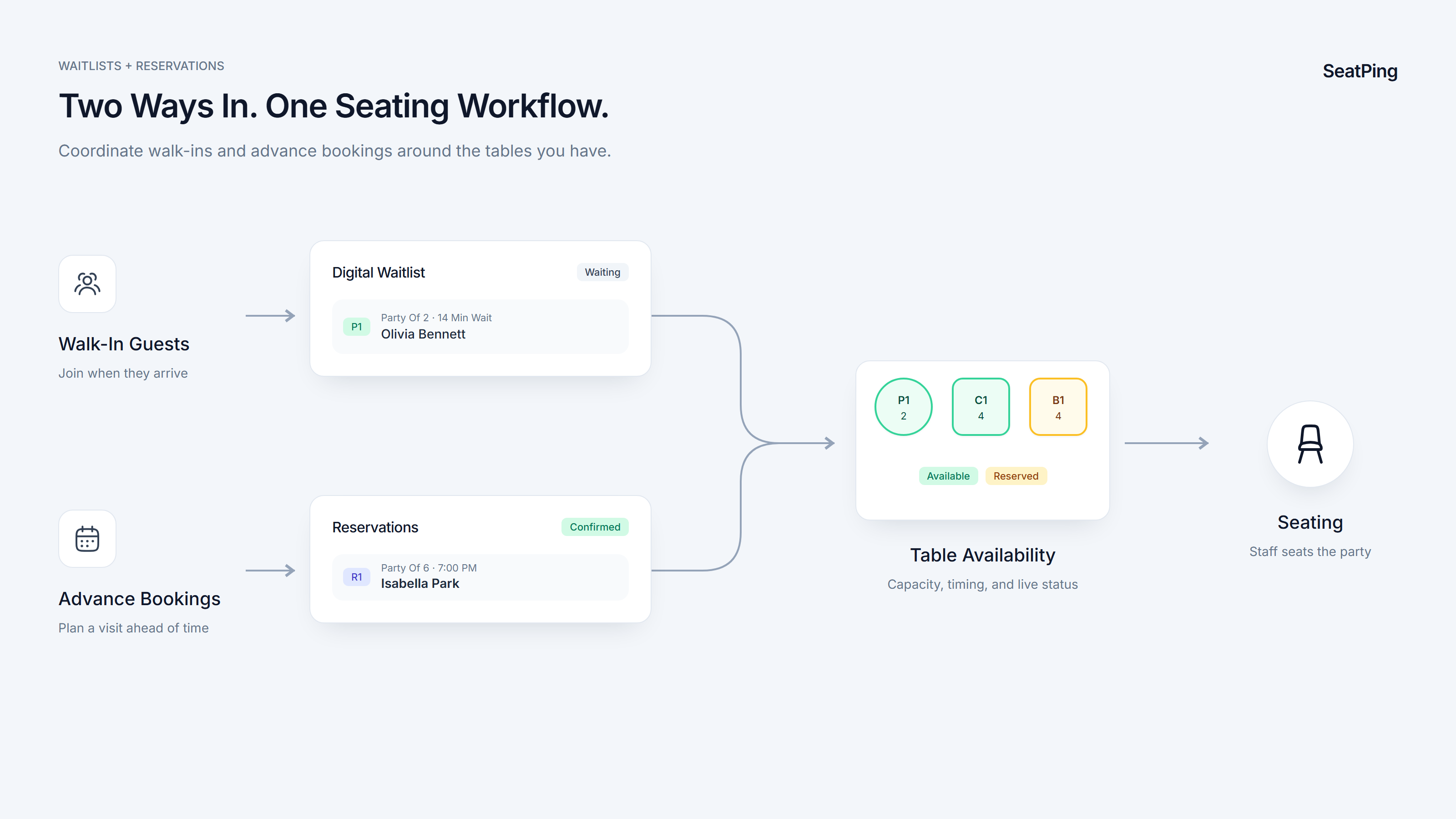
With SeatPing, restaurants can manage waitlists, reservations, and table availability from one platform. Learn how SeatPing simplifies restaurant operations and helps staff coordinate guest arrivals more efficiently.
How SeatPing Helps Manage Waitlists and Reservations Together
Managing separate systems for walk-ins, reservations, and table seating can complicate front-of-house operations.
SeatPing brings these workflows together, helping restaurants organize the guest journey from arrival to seating.
Digital Waitlists and Online Reservations
With SeatPing, walk-in guests can join a virtual queue by scanning a QR code without downloading an app or creating an account.
Restaurants can also accept advance reservations through their public restaurant profiles.
Guests can receive queue notifications through supported SMS, WhatsApp, or email channels, depending on the restaurant's configuration.
Floor Management and Smart Table Assignments
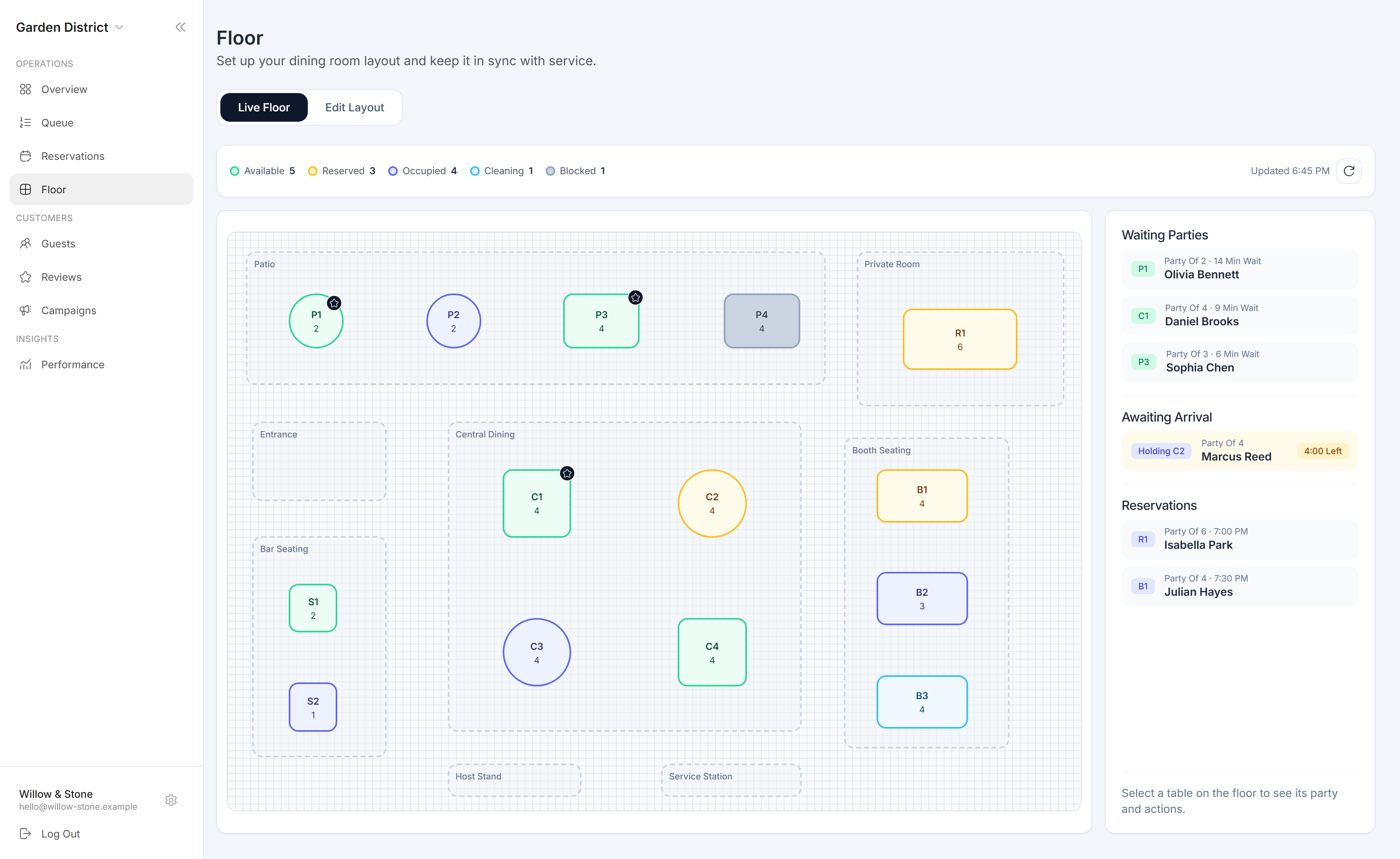
SeatPing's Floor Management provides a centralized view of waiting parties, upcoming reservations, and table availability.
Staff can monitor tables marked as Available, Reserved, Occupied, Cleaning, or Blocked.
SeatPing also supports smart table assignments, with manual adjustments available when needed.
Guest CRM and Visit History
SeatPing also connects guest activity to its Guest CRM, allowing restaurants to review guest profiles and previous visits.
With permission-based campaigns, businesses can reconnect with customers through supported communication channels.
Together, these features help restaurants manage more of the guest journey from one platform.
How to Choose the Right System for Your Restaurant
Before deciding between a waitlist and reservations, consider three questions:
How do most customers arrive? Frequent walk-ins favor waitlists, while planned visits favor reservations.
How predictable is table availability? Variable dining durations may benefit from flexible queue management.
Do you serve both walk-ins and bookings? A combined system can help coordinate seating more efficiently.
For many restaurants, the best solution isn't choosing one over the other. It's making both work together.
Ready to Simplify Your Restaurant's Guest Management?
Whether your restaurant relies on walk-ins, reservations, or both, organizing guest arrivals is essential to a smoother dining experience.
SeatPing helps restaurants manage digital waitlists, reservations, table seating, and guest relationships from one platform.
Explore SeatPing for Business to get started.
Frequently Asked Questions About Restaurant Waitlists and Reservations
What Is the Main Difference Between a Waitlist and a Reservation?
A waitlist manages guests waiting for an available table, while a reservation allows guests to arrange a booking for a future date and time.
Can Restaurants Accept Walk-Ins and Reservations Together?
Yes. Restaurants can manage both, provided they coordinate seating capacity and upcoming bookings to avoid conflicts.
Do Reservations Guarantee Immediate Seating?
Not necessarily. Unexpected delays, late departures, or operational changes can affect seating even with a confirmed reservation.
Do Digital Waitlists Reduce Restaurant Wait Times?
Not necessarily. Digital waitlists don't make tables available faster, but they simplify check-ins, improve communication, and allow guests to wait more comfortably.
Can Restaurants Manage Waitlists and Reservations in One Platform?
Yes. SeatPing supports digital waitlists, online reservations, and Floor Management tools that help staff coordinate guest arrivals and table availability.